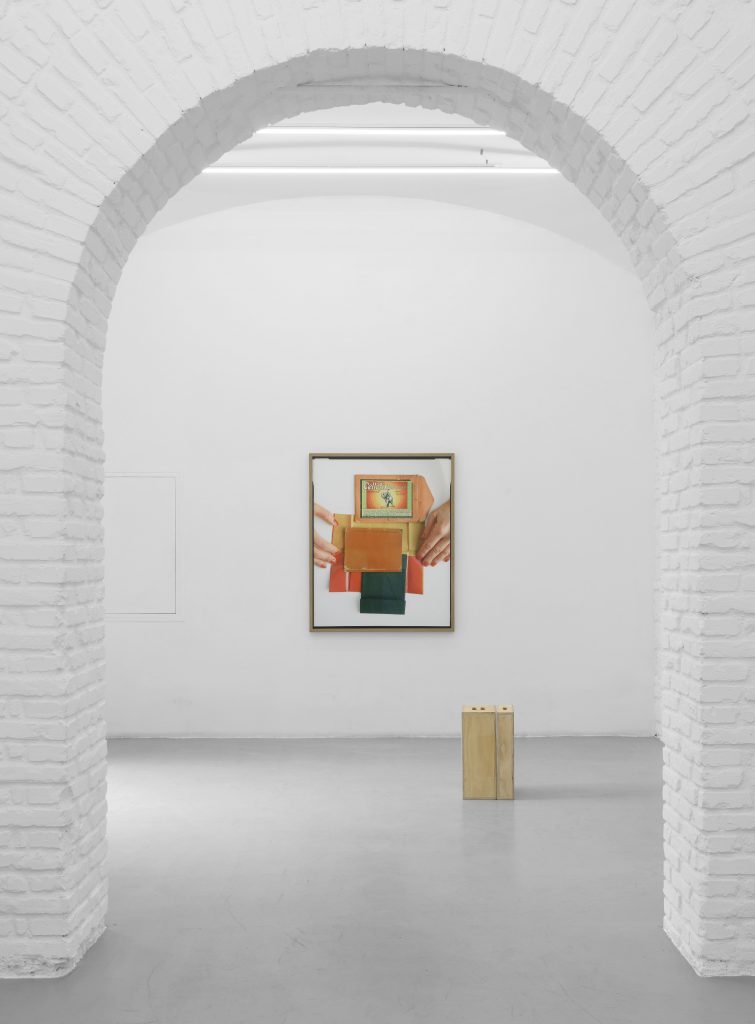
The exhibition “To Tell a Story” brings together photographs, objects, and sound devices. It is conceived as a reflection on how we relate to the world through storytelling. It includes a series of photographs taken in the birthplaces of ancient philosophy around the Mediterranean basin: almost 2,500 years ago, the pre-Socratic philosophers were the first in the Western world to seek an objective description of reality, relying on their observations rather than on myths. Paradoxically, this quest for truth has reached us only through quotations and reported texts; it is therefore thanks to stories that we know the origins of our rational thought. As early as 1983, Susan Sontag, in the television interview “To Tell a Story,” emphasized that the notion of narrative refers to two diametrically opposed definitions: on the one hand, reporting facts; on the other, creating fiction. The exhibition explores this ambivalent function of narration in the form of an archaeology of representations that puts into perspective the omnipresence of images and storytelling today. At a time when our beliefs are more than ever tied to the stories with which we identify, and when, following the rise of social networks and algorithms driven by the attention economy, multiple narratives coexist to the point of replacing facts, the artist’s works invite us to reflect on what makes a shared experience of the world possible.
To Tell a Story, 2025
MONITOR Rome Via degli Aurunci 44, 46, 48, Roma
Papiers insolés , 2024
Photographs, pigment print on FineArt Baryta Hahnemühle, 105 x 135 cm
In the early days of photography, photographers made and applied their own emulsion for their images. Then they were quickly offered a multitude of ready-to-use media for both shooting and printing. The brand name, packaging or slogan of these media, promising contrast, depth or particular tones, became synonymous with so many different ways of looking at the world. The papiers insolés series presents packs of black-and-white photographic paper from the 1920s, designed to be exposed to the enlarger and developed using a developer (gelatin silver bromide paper by Grieshaber) or designed for contact printing, darkening in sunlight (citrate paper by Grieshaber, Lumière & Jougla, Cellofix). The papers, which have been kept away from light for over a hundred years, are photographed here being unpacked in full sunlight.